
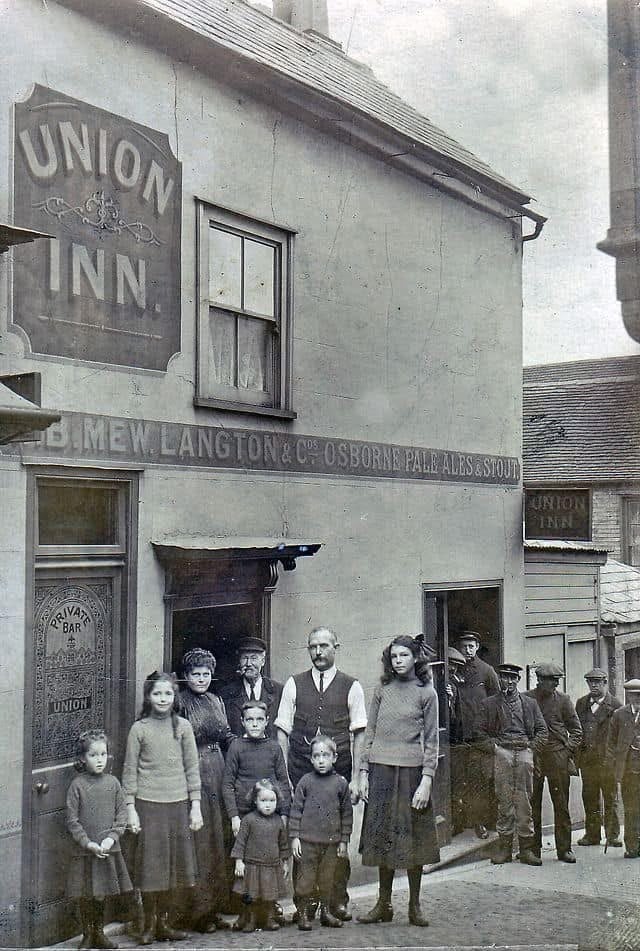
Since 1828
Pubs like this are built by the people who drink in them.
Ours have been fishermen, sailors, yacht crews, shipwrights and — more recently — anyone who's come to Cowes for the water.
The Union is documented as an established public house by at least 1828, when Robert Locke was its landlord. The site itself is thought to go back much further — historical information from the Isle of Wight Council suggests three fishermen's cottages may have stood here as far back as the 16th century. It's the site, not the present building, that carries those origins.
The Long Version
A short history
1500s
The site before the pub
Three fishermen's cottages are believed to have stood here as far back as the 16th century, when Cowes was still a small fishing community. It is the site — not the present building — that carries those origins.
1828
The Union is established
The Union Inn is documented as an established public house by at least 1828, when Robert Locke is recorded as its landlord. In 1841 he was recorded as a victualler here — the pub's story can be followed through generations of keepers from this point.
1841
On the waterfront
On Watch House Lane, the Union has always sat close to the historic heart of Cowes and its waterfront. For centuries the town has been shaped by fishing, sailing and boatbuilding, and the pub has been part of that life throughout.
Today
Still a proper pub
Cowes and the Union have both changed enormously over the centuries. What the pub is for has stayed remarkably familiar: somewhere to meet, eat and drink well, and share a story. We're glad to carry that on.
Keeping the House
Eleven landlords,
one long century.
Census returns and trade directories let us follow the pub through the people who kept it. From Robert Locke's victualler's licence in 1841 onwards, the same names and families reappear down the years — a record of ordinary working lives lived behind one bar.
- 1828–1844
- Robert Locke
- 1849–1852
- George Parkman
- 1855–1861
- Edward Keates
- 1871–1878
- James Burridge
- 1881–1885
- Edwin Glasscoe
- 1889–1891
- Frederick Turner
- 1891 onwards
- Henry Hall
- 1898
- Henry Leverett
- 1901–1904
- Joseph J. Billows
- 1911
- Robert Jesse Mursell
- 1920s–1930s
- A. E. Harwood
Local Legend
The Fisherman's
Wife.
Local legend tells of a fisherman's wife whose story has become part of the folklore surrounding the Union Inn.
The story tells of a light that was kept to help guide boats safely around Cowes. According to the legend, the light went out during a storm — and the fishermen it should have brought home were lost at sea.
The story says the woman was left with a terrible sense of guilt, and that her presence is said to have remained within the old inn ever since. The best-known part of the tale is the sound of footsteps on the staircase, traditionally said to be heard travelling up and down the stairs.
This is folklore, not established fact — but it has been told here for a very long time, and we rather like it.
On the Water's Edge
A town shaped by the sea,
and a pub shaped by the town.
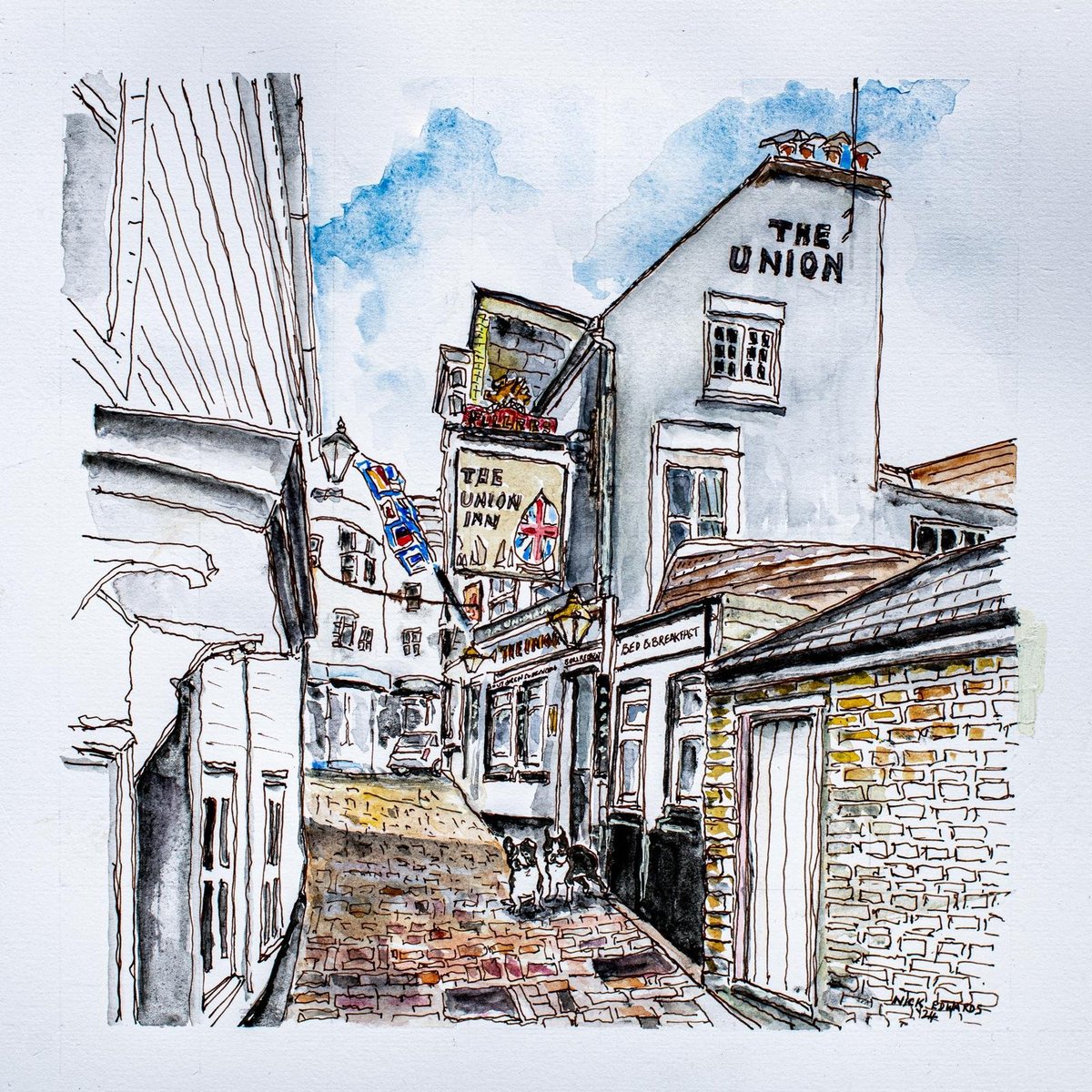
Watch House Lane sits in the historic heart of Cowes, a minute or two from the waterfront. For centuries this town has been made by fishing, sailing and boatbuilding — and the Union has stood among it throughout, kept going by the people those trades brought through the door.
Cowes grew into one of the world's best-known sailing towns, and the Union grew with it. Its history is bound up with everyone who has passed through: fishermen working the Solent, sailors and yacht crews, the families who lived along these lanes, and the visitors who have come to Cowes for the water for generations.
The trade on the river changed. The pub's purpose never really did.
Come and see for yourself.
Nearly two hundred years of people coming in off the water. Come and add to it.